


The staff provided excellent care, were nice to talk to and made a very comfortable visit. They were able to provide fillings to several chipped teeth with short notice while visiting Phoenix from out of country. Both myself and my dentist back home agreed the quality of the fillings were well done, and the colour was a great match. Highly recommend for the great staff and professional work done.
When your doctor recommends removing enlarged tonsils, most parents assume surgery is the only path. At Tempe Dentistry, Dr. Jeremy Chan, DDS, trained at the Arthur A. Dugoni School of Dentistry, is Vivos-certified and holds membership in the AADSM and AASM. He works with patients and families across Tempe AZ who want to understand every option. No decision about tonsil care should happen without a clear comparison.
The difference between laser tonsil treatment and a tonsillectomy goes well beyond the size of the incision. Families in South Tempe and McClintock are choosing laser treatment before committing to an operating room. The recovery is shorter, the risk profile is lower, and the results are meaningful for the right candidates. Understanding which option fits your situation starts with a clear look at how each one works.
What Is a Tonsillectomy and How Does It Work?
A tonsillectomy is a surgical procedure that removes the tonsils entirely from the back of the throat. It requires general anesthesia and takes place in a hospital or surgical center. Recovery runs one to two weeks.
The patient cannot eat solid food during most of that recovery. Post-operative pain is significant, particularly around days three through five. That is when scabs in the throat begin to loosen. Tonsillectomy has a strong clinical track record for the right patients. It is the appropriate choice when tonsils are severely enlarged or when chronic infection meets clinical thresholds. A sleep study confirming significant obstructive sleep apnea also warrants surgery over laser treatment.
What Is QuietNite Laser Tonsil Treatment and How Does It Work?
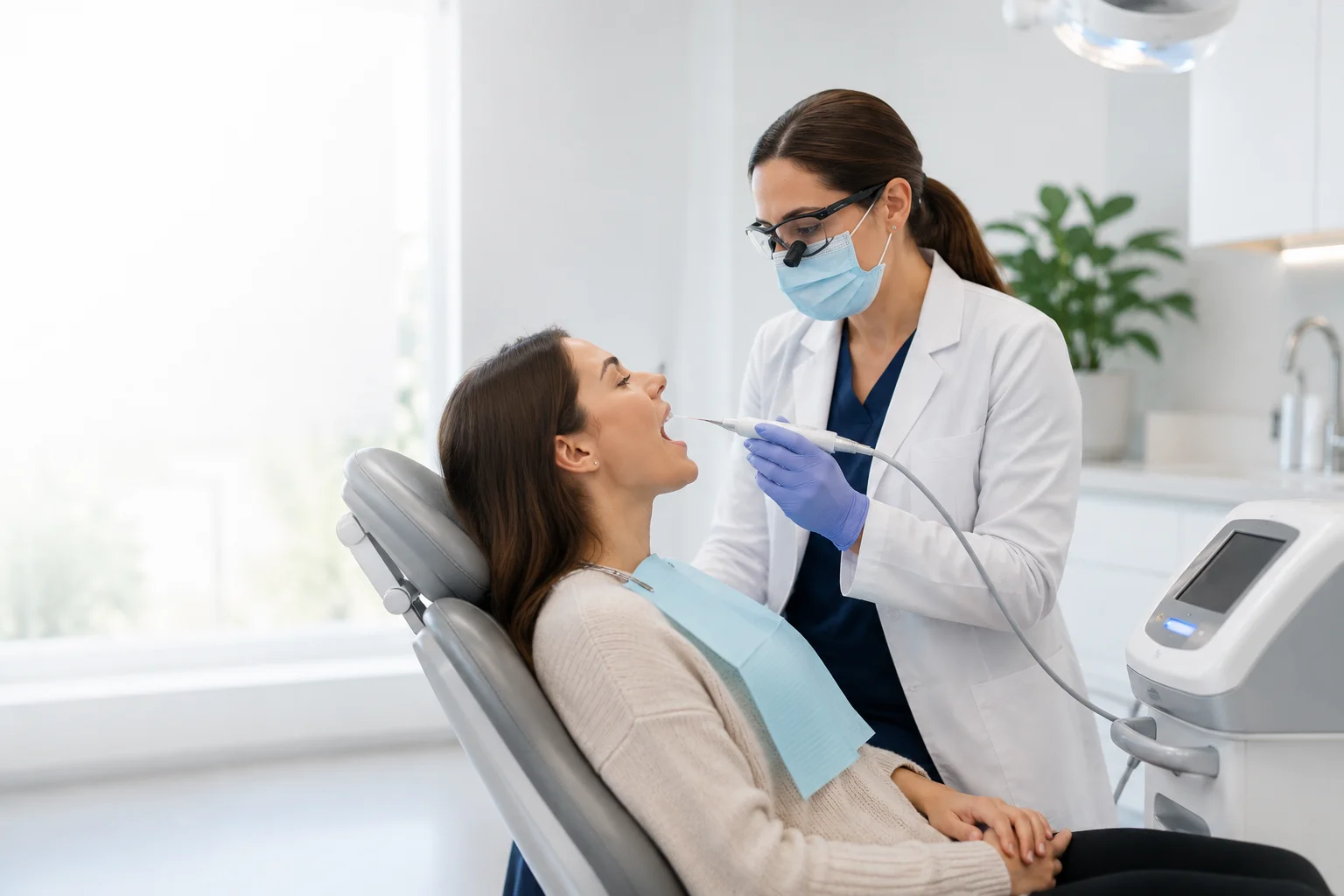
QuietNite laser tonsil treatment uses targeted laser energy to reduce tonsil tissue without removing it entirely. The procedure happens chairside at Tempe Dentistry with no general anesthesia and no hospital stay. Most patients feel gentle warmth during treatment rather than sharp discomfort. They return to normal activity the same day or the day after. Tempe Dentistry offers a thorough evaluation with Dr. Jeremy Chan to determine whether QuietNite laser treatment is the right fit before any decision is made.
The laser stimulates a controlled tissue response that shrinks tonsil volume over a series of sessions. Results build gradually as the tissue responds between visits. Most patients need three to five sessions spaced several weeks apart before the full benefit becomes clear. For patients with moderate tonsil enlargement and mild sleep-disordered breathing, this approach produces meaningful airway improvement. It carries none of the risks that come with general anesthesia.
When Is Tonsillectomy the Right Choice?
Tonsillectomy is the right answer when the clinical need exceeds what laser reduction can address. The criteria are specific and well-established. Dr. Chan will tell you directly when surgery is the better path. He will connect you with the right ENT referral. Here are the situations where tonsillectomy is most clearly supported by the evidence.
- Seven or more documented throat infections in one year
- Five or more infections per year for two consecutive years
- Three or more infections per year for three consecutive years
- Grade 4 tonsil enlargement where tonsils meet at the midline and block airflow significantly
- Confirmed obstructive sleep apnea of moderate to severe severity on a sleep study
- Recurrent peritonsillar abscess that does not respond to antibiotics
- Suspected malignancy requiring tissue evaluation
If your situation meets any of these criteria, surgery is the more appropriate path. Dr. Chan will say so directly and help you get to the right surgical provider. The goal is the right outcome, not the easiest recommendation.
How Do the Two Options Compare Side by Side?
The right choice depends on your clinical picture, your symptoms, and your recovery tolerance. There is no single answer that fits every patient. The table below shows how the two options stack up across the factors that matter most.
| Factor | Tonsillectomy | QuietNite Laser Treatment |
| Anesthesia | General anesthesia required | No anesthesia required |
| Setting | Hospital or surgical center | Dental office |
| Recovery time | One to two weeks | Same day to one to two days |
| Pain level | Significant, especially days three to five | Mild discomfort |
| Number of visits | One surgical procedure | Three to five sessions |
| Tonsil outcome | Complete removal | Tissue reduction, tonsils remain |
| Referral needed | Yes, ENT surgeon | No referral needed |
| Best suited for | Severe obstruction, chronic infection, significant OSA | Moderate enlargement, snoring, mild sleep-disordered breathing |
| Appropriate for children | Yes, widely performed in pediatric patients | Yes, for children with moderate enlargement |
The comparison shows why laser treatment appeals to patients who want to try non-surgical options first. Committing to an operating room is a bigger step than many families want to take without exploring alternatives. It also shows why surgery remains the right answer when the clinical need is severe. Reduction alone cannot address every case adequately.
Which Patients Are Best Suited for QuietNite Laser Treatment?
QuietNite laser treatment works best for patients with moderate tonsil enlargement. Symptoms centered on snoring, mouth breathing, or mild sleep-disordered breathing are the strongest indicators. It is appropriate for children and adults who do not meet the clinical thresholds that make tonsillectomy necessary. Here are the patient profiles that respond best to laser tonsil reduction.
- Adults or children with Grade 2 or Grade 3 tonsil enlargement without severe airway obstruction
- Patients whose snoring disrupts sleep but who have not been diagnosed with significant obstructive sleep apnea
- Children showing signs of sleep-disordered breathing including restless sleep, mouth breathing, and daytime fatigue
- Adults who want to avoid general anesthesia due to health history, anxiety, or personal preference
- Patients who need a non-surgical option because a two-week recovery is not practical
- Children whose parents want to try a less invasive approach before agreeing to surgery
- Patients with mild to moderate tonsil involvement who have not responded to lifestyle changes alone
Dr. Chan evaluates every case honestly. He will refer to an ENT surgeon when tonsillectomy is the better clinical choice. An honest evaluation is more useful than a one-size-fits-all recommendation. Tonsil size plays a direct role in sleep apnea and airway symptoms. That connection matters when choosing between laser treatment and surgery.
What Does Recovery Look Like for Each Option?
Recovery is one of the clearest differences between the two treatments. For tonsillectomy, the first two to three days after surgery are manageable for most patients. Days three through five are typically the hardest as post-operative scabs begin to loosen. Eating is limited to soft foods and cold liquids throughout recovery. Children miss one to two weeks of school and adults miss the same from work.
For QuietNite laser treatment, most patients go home the same day. They return to their normal routine within one to two days. There is no dietary restriction beyond avoiding very hot or spicy food for the first day or two. Children can return to school the next day in most cases. The sessions fit into a regular schedule without major disruption. Read more about the full QuietNite laser treatment process and what to expect at each visit.
You Deserve a Clear Answer Before Anyone Makes a Decision.
You are not overreacting by wanting to understand every option. That is the right instinct before agreeing to surgery for yourself or your child. Families in Tempe Gardens and Broadmor who come in for a tonsil evaluation leave with a straight answer. Dr. Chan tells you which approach fits your clinical picture and why. Dr. Chan is a Dugoni-trained, Vivos-certified dentist and member of the AADSM and AASM. He is the guide who gives you the full picture before any decision gets made.
Schedule an evaluation at Tempe Dentistry today. Find out whether QuietNite laser treatment is the right fit. If surgery is the better path, Dr. Chan will tell you that directly. You do not have to guess. Dr. Chan will give you a direct answer and a clear plan either way.
Frequently Asked Questions
Is laser tonsil treatment as effective as a tonsillectomy?
For the right patients, QuietNite laser tonsil reduction produces meaningful improvement in snoring and airway obstruction without the recovery burden of surgery. It is not a replacement for tonsillectomy when surgery is clinically indicated. For patients with moderate enlargement and mild to moderate symptoms, laser treatment addresses the problem directly and effectively. Non-surgical soft tissue treatments are recognized as appropriate for carefully selected patients when proper candidacy evaluation happens first. Matching treatment intensity to severity is standard clinical guidance in sleep medicine, and laser treatment fits well within those guidelines for the right candidates.
How long does QuietNite laser tonsil treatment take compared to tonsillectomy recovery?
A single QuietNite laser session takes a short amount of time in the dental office. Patients return to normal activity the same day. Tonsillectomy recovery takes one to two weeks, with the most difficult period falling between days three and five. Most QuietNite patients complete three to five sessions over several weeks with no downtime between visits. Recovery from tonsillectomy typically involves significant throat pain and a restricted diet for up to two weeks. In-office laser procedures are safe and well-tolerated when performed by a qualified provider.
Can children have laser tonsil treatment instead of a tonsillectomy?
Yes. Children with moderate tonsil enlargement and symptoms like snoring are strong candidates. Mouth breathing and mild sleep-disordered breathing also fit within the candidacy criteria for QuietNite laser treatment. Dr. Chan evaluates each child individually, considering tonsil grade, symptom severity, and overall airway health before making any recommendation. Children who meet the clinical thresholds for tonsillectomy will be referred for surgery. Not all children with enlarged tonsils require surgical removal, and clinical evaluation should always guide the decision. The specific criteria for when surgery is warranted in pediatric patients are well established and Dr. Chan applies them directly at every evaluation.
Do you need a referral for QuietNite laser tonsil treatment at Tempe Dentistry?
No referral is needed. You can schedule directly with Tempe Dentistry for a tonsil evaluation and Dr. Chan will assess your situation and recommend the appropriate path. If laser treatment fits, the process begins at the dental office with no additional referrals required. If surgery is the better option based on your clinical picture, Dr. Chan will connect you with the right ENT referral. Dentists trained in airway health are recognized for their role in evaluating and treating soft tissue airway conditions. Dental providers are also key members of the airway care team for both adults and children when sleep-disordered breathing is involved.
Related Articles
QuietNite Laser Treatment Take – Laser Tonsil Treatment – QuietNite Laser Sessions – QuietNite Laser Candidates