



The staff provided excellent care, were nice to talk to and made a very comfortable visit. They were able to provide fillings to several chipped teeth with short notice while visiting Phoenix from out of country. Both myself and my dentist back home agreed the quality of the fillings were well done, and the colour was a great match. Highly recommend for the great staff and professional work done.
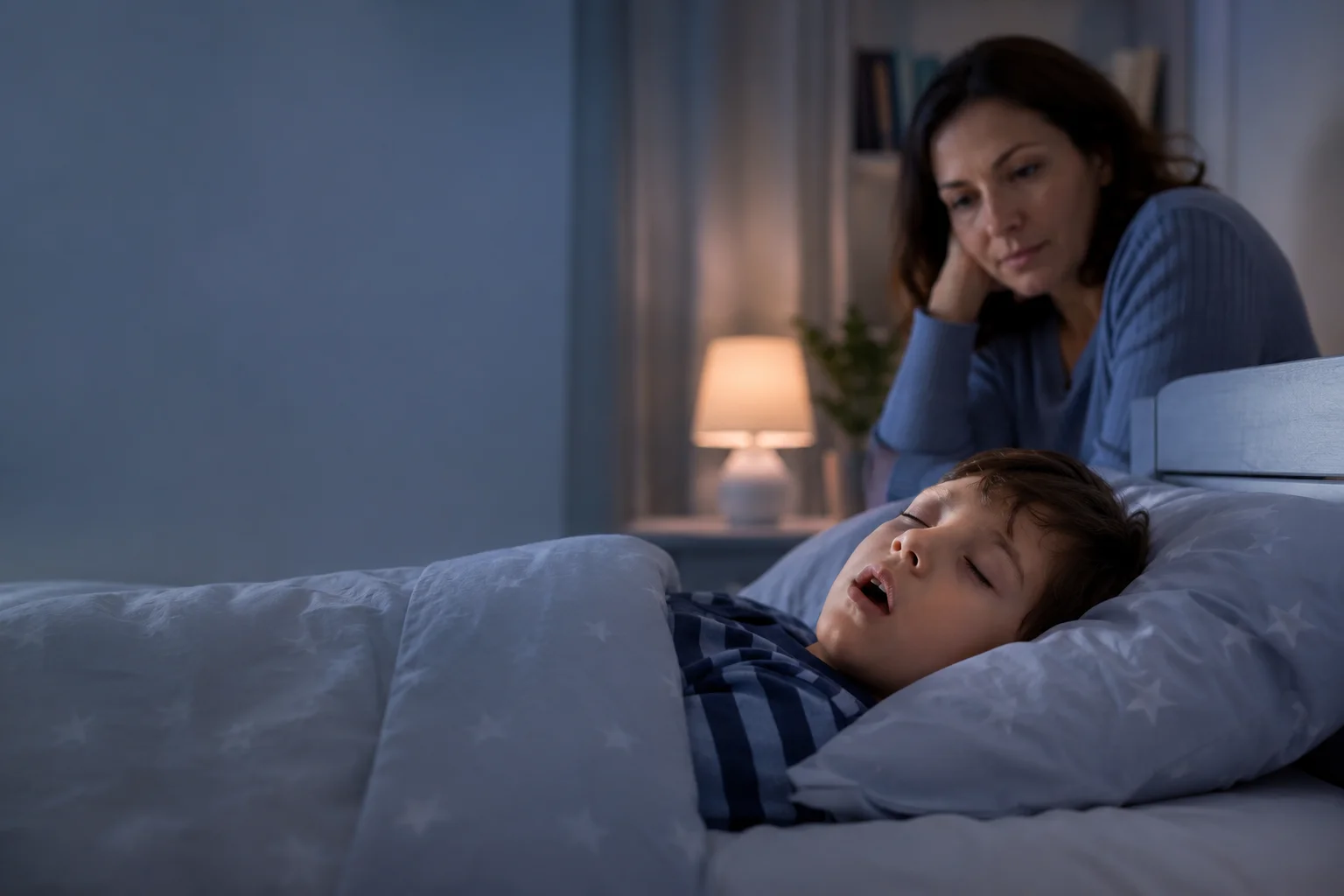
Most parents hear their child snore and assume it is harmless. At Tempe Dentistry, Dr. Jeremy Chan, DDS, trained at the Arthur A. Dugoni School of Dentistry, is Vivos-certified and holds membership in the AADSM and AASM. He evaluates children across Tempe AZ whose parents have noticed snoring, restless sleep, or mouth breathing. Most are not sure what to do next. The answer depends on how often it happens and how loud it is. What is showing up during the day matters just as much.
Occasional light snoring during a cold is one thing. Snoring that happens most nights, regardless of illness, is something else entirely. Families in South Tempe and McClintock are often surprised. Their child’s behavioral problems, poor grades, or chronic fatigue frequently trace back to a nighttime breathing problem. Knowing the difference between harmless snoring and a real airway concern can change everything for your child.
When Is Snoring in Children Normal?
Occasional snoring in children is common and usually harmless. It often shows up when a child has a cold, allergies, or nasal congestion. Those conditions temporarily narrow the airway. When the congestion clears, the snoring stops. This type of snoring does not require a clinical evaluation.
The snoring that warrants attention is the kind that happens regularly, regardless of whether your child is sick. Studies show that a meaningful share of children snore habitually, meaning three or more nights per week. Across the general child population, research estimates that 1 to 5 percent have obstructive sleep apnea. That is a meaningful number. Most of those children go undiagnosed for months or years. The symptoms look like something else entirely.
What Causes Snoring in Children?
Snoring happens when airflow through the throat is restricted during sleep, causing the surrounding tissue to vibrate. In children, the most common cause is enlarged tonsils or adenoids that narrow the airway. Other contributing factors include nasal congestion, jaw structure, and obesity. Low muscle tone in the throat and tongue can also play a role.
Enlarged tonsils are the leading structural cause of sleep-disordered breathing in children. When tonsil tissue grows large relative to the airway, it restricts airflow during sleep. The surrounding tissue vibrates, which is what produces the snoring sound. The airway narrows further when adenoids are also enlarged. Tempe Dentistry offers airway evaluations with Dr. Jeremy Chan to assess whether enlarged tonsils or adenoids are driving your child’s snoring. Learn more about sleep apnea and airway health and what enlarged tonsils do to children’s sleep.
What Are the Warning Signs That Snoring Is a Problem?
Snoring is the most visible sign of a breathing problem during sleep. It is not always the most telling one. Here are the warning signs that mean your child’s snoring deserves a clinical evaluation.
- Snoring 3 or more nights a week
- Mouth breathing, day or night
- Pauses in breathing during sleep
- Restless sleep, kicking, or frequent waking
- Neck extended or head off the pillow
- New bedwetting after being dry
- Morning headaches or dry mouth
- Daytime sleepiness after a full night
Three or more of these signs appearing consistently over several weeks is a strong signal. A child showing this pattern deserves an airway evaluation, not a wait-and-see approach. The longer an airway problem goes unaddressed, the more it affects development, behavior, and long-term health.

How Does Poor Sleep Affect Children During the Day?
This is where most parents miss the connection. A child with obstructive sleep apnea does not always look tired. Many become hyperactive, impulsive, and difficult to manage instead. Research shows up to 25 percent of children with ADHD may have a sleep-breathing disorder driving the behavior. The table below shows the most common daytime symptoms and what they are mistaken for.
| Daytime Symptom | Commonly Mistaken For |
| Hyperactivity and impulsivity | ADHD |
| Difficulty focusing in school | Learning disability |
| Mood swings and irritability | Anxiety or behavioral disorder |
| Daytime sleepiness | Depression or laziness |
| Poor academic performance | Low motivation or effort |
| Bedwetting | Developmental delay |
| Morning headaches | Tension or stress |
Treating the airway often produces dramatic improvements in behavior and school performance that medication alone cannot match. When a child’s sleep-breathing problem is addressed, the daytime picture frequently changes within weeks.
What Should Parents Do if They Suspect a Problem?
Start by tracking what you observe over several nights. Write down how often your child snores, how loud it is, and whether you see any pauses in breathing. Note any daytime symptoms including behavior, mood, school performance, and energy level. That information gives the evaluating provider a clearer picture before any examination happens. Here are the steps to take before and during your child’s airway evaluation.
- Log how often and how loud the snoring is
- Note any breathing pauses at night
- Track daytime behavior, focus, and energy
- Record sleep positions and mouth breathing
- Gather past sleep studies or evaluations
- Ask teachers about focus or behavior
- Book an airway evaluation with Dr. Chan
Bring those observations to a provider trained in pediatric airway health. A general pediatrician can screen for obvious concerns, but an airway-focused evaluation goes deeper. Dr. Chan assesses tonsil size, adenoid involvement, jaw structure, and overall airway space. That tells him what is driving the snoring and which treatment options fit your child. When QuietNite laser treatment is the right fit, it reduces tonsil tissue without general anesthesia. There is no lengthy recovery.
You Noticed Something. That Is Worth Following Up On.
You are not overreacting by taking your child’s snoring seriously. Families in Tempe Gardens and Broadmor leave their child’s airway evaluation with a clear picture. The options are laid out plainly before any decision is made. Dr. Chan is a Dugoni-trained, Vivos-certified dentist and member of the AADSM and AASM. He is the guide who gives you a straight answer. Every treatment plan is built around your child’s specific airway, not a generic protocol.
Schedule an evaluation at Tempe Dentistry today. Find out whether your child’s snoring is harmless or whether something in the airway needs attention. You do not have to keep wondering. Dr. Chan will give you a clear answer and a path forward.
Frequently Asked Questions
Is it normal for children to snore every night?
No. Nightly snoring in children is not normal and should be evaluated. Occasional snoring during a cold or allergy flare is common and usually resolves on its own. Snoring that happens three or more nights per week regardless of illness is considered habitual. Habitual snoring carries a meaningful risk of underlying sleep-disordered breathing. Research shows 1 to 5 percent of children have obstructive sleep apnea. Many go undiagnosed for years. Clinical evaluation is recommended for any child who snores habitually.
What are the signs that my child’s snoring is serious?
The signs that snoring is more than harmless noise include mouth breathing, pauses in breathing, and restless sleep. Waking with headaches, bedwetting in a previously dry child, and daytime hyperactivity also point toward a real problem. These symptoms together point toward a sleep-breathing disorder rather than simple snoring. Pediatric sleep research shows up to 25 percent of children with ADHD may have an underlying sleep-breathing condition. Screening all children who snore regularly for obstructive sleep apnea is recommended.
Can enlarged tonsils cause my child to snore?
Yes. Enlarged tonsils are the leading structural cause of snoring and obstructive sleep apnea in children. When tonsil tissue grows large relative to the airway, it restricts airflow during sleep. The surrounding tissue vibrates, which is what produces the snoring sound. Adenoids often enlarge alongside the tonsils, narrowing the airway from two directions at once. Children with Grade 2 or higher tonsil enlargement face real risk for sleep-disordered breathing. The effects reach behavior, development, and long-term health. Enlarged tonsils are among the most common treatable causes of pediatric sleep apnea.
Does my child need surgery for snoring caused by enlarged tonsils?
Not necessarily. Tonsillectomy is one option, but it is not the only one. QuietNite laser treatment at Tempe Dentistry reduces tonsil tissue using targeted laser energy. No general anesthesia is required and recovery is minimal. Dr. Chan evaluates each child individually before recommending any path. Children with Grade 2 or Grade 3 enlargement who fall below surgical thresholds may be good candidates for tissue-sparing options. Approaches that reduce tonsil tissue without full removal are clinically supported for appropriate candidates when proper evaluation guides the decision. The criteria for when tonsillectomy is warranted are well established and Dr. Chan applies them at every evaluation.
Related Articles
QuietNite Laser Treatment Take – Laser Tonsil Treatment – QuietNite Laser Sessions – QuietNite Laser Candidates