



The staff provided excellent care, were nice to talk to and made a very comfortable visit. They were able to provide fillings to several chipped teeth with short notice while visiting Phoenix from out of country. Both myself and my dentist back home agreed the quality of the fillings were well done, and the colour was a great match. Highly recommend for the great staff and professional work done.
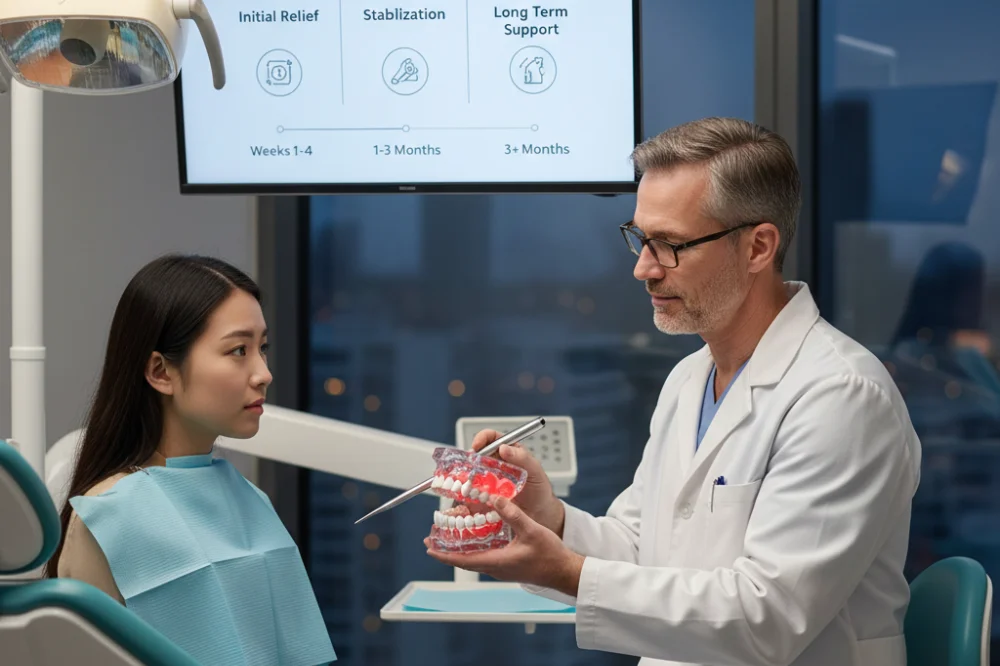
Jaw discomfort has a way of creeping into daily routines. Clicking when you chew, soreness near the ears, or lingering headaches often lead people to wonder how long TMJ treatment might really take. Many patients worry that treatment will drag on without a clear end point. The reality is that TMJ treatment timelines vary, but most people start feeling relief sooner than they expect.
At Tempe Dentistry, Dr. Jeremy Chan helps patients understand what their personal TMJ treatment timeline may look like. With advanced training in TMJ disorders and dental sleep medicine, Dr. Chan focuses on identifying the cause of the problem so treatment moves forward with purpose, not guesswork. His care aligns with American Dental Association guidance and emphasizes realistic expectations.
Why TMJ Treatment Timelines Are Different for Everyone
TMJ disorder is not a single condition, so there is no universal treatment timeline. Some patients have muscle based TMJ issues that respond quickly to care. Others have joint changes or bite problems that take longer to stabilize.
The timeline depends on how long symptoms have been present, how severe they are, and what is causing the strain. A jaw that has been under stress for years usually needs more time to heal than a recently irritated joint.
What Happens During the Early Phase of TMJ Treatment
The first phase of TMJ treatment focuses on calming the joint and surrounding muscles. This stage is about reducing pain, inflammation, and muscle tension so the jaw can start to recover.
Many patients notice improvement within the first few weeks. Jaw soreness often decreases, headaches become less frequent, and jaw movement feels smoother. Early progress helps confirm that the treatment plan is addressing the real issue.
How Long Muscle Based TMJ Treatment Often Takes
When TMJ disorder is primarily caused by muscle tension, clenching, or grinding, treatment is often shorter. These cases respond well once the muscles are allowed to relax and the jaw is supported properly.
In many muscle based cases, significant improvement occurs within one to three months. Habit awareness and consistent use of recommended appliances play a big role in how quickly symptoms improve.
TMJ Treatment Timelines for Joint or Structural Issues
TMJ disorder involving joint changes, arthritis, or long standing bite imbalance usually requires more time. The joint needs ongoing support while inflammation is reduced and movement is stabilized.
In these cases, treatment may take several months or longer. Progress is still steady, but the focus shifts toward long term joint protection and preventing future flare ups rather than quick resolution.
Factors That Influence How Long TMJ Treatment Takes
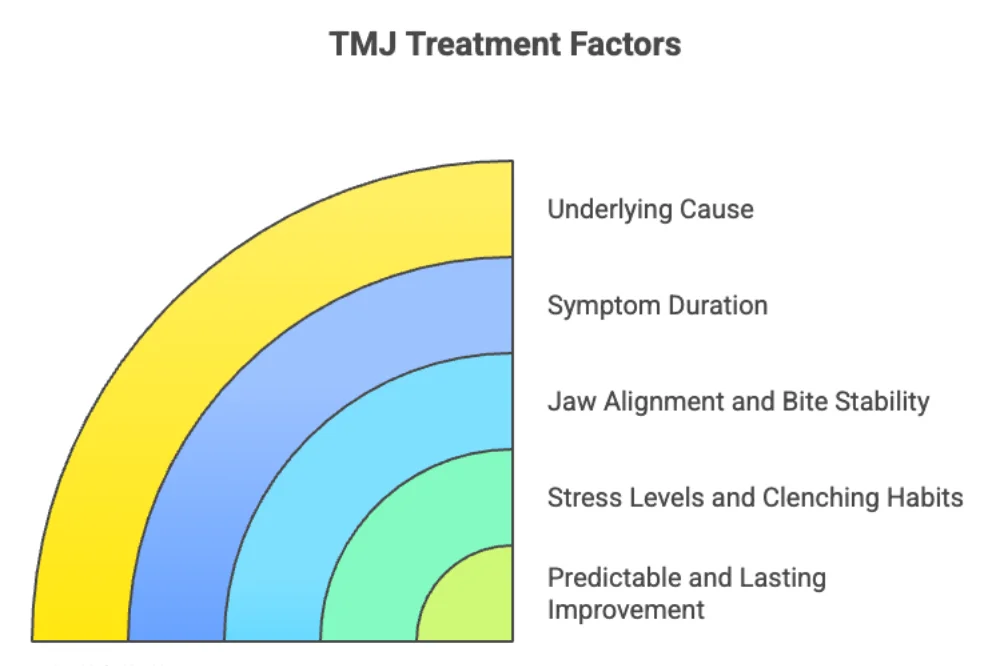
Several factors affect how quickly TMJ treatment works. Understanding these helps patients set realistic expectations and stay encouraged.
Key factors include:
- The underlying cause of the TMJ disorder
- How long symptoms have been present
- Jaw alignment and bite stability
- Stress levels and clenching habits
Addressing these factors together leads to more predictable and lasting improvement.
What a Typical TMJ Treatment Timeline Looks Like
Although every patient is different, TMJ treatment often follows a general pattern. This helps patients understand what to expect as care progresses.
| Treatment Phase | Approximate Timeframe | Primary Focus | What Patients Notice |
| Initial Relief | Weeks 1–4 | Reducing pain and tension | Less soreness and fewer headaches |
| Stabilization | 1–3 months | Supporting jaw position | Improved comfort and movement |
| Long Term Support | 3+ months | Preventing recurrence | Stable jaw and minimal symptoms |
Knowing this progression helps patients stay confident during treatment.
Why Consistency Matters More Than Speed
TMJ treatment works best when patients follow recommendations consistently. Skipping appliance use or ignoring habits can slow progress, even with a good treatment plan.
Steady improvement is the goal, not rushing the process. Patients who stay consistent often experience smoother recovery and fewer setbacks over time.
When Patients Usually Feel Noticeable Relief
Most patients feel some level of relief within the first few weeks of treatment. This early improvement is encouraging and helps confirm that the jaw is responding well.
Patients from areas like South Tempe, The Lakes, and McClintock often say their biggest relief is finally understanding what is happening. Clarity alone reduces stress and muscle tension, which supports healing.
Taking the Next Step Toward a Clear Timeline
Ongoing jaw discomfort can quietly shape your days, affecting how you eat, sleep, and even focus at work or school. Dr. Jeremy Chan serves as a guide for patients who want clarity about what comes next. His experience with TMJ disorders allows him to explain timelines in a way that feels realistic and reassuring.
Whether you live near Downtown Tempe, South Tempe, or The Lakes, the goal is the same, to move from uncertainty to a clear plan. Scheduling a consultation at Tempe Dentistry is the first step toward understanding your TMJ treatment timeline and starting the path toward lasting comfort.
Frequently Asked Questions
How long does TMJ treatment usually take?
This question matters because patients want to know how much time and effort to expect.
What people should be asking instead is what factors affect their personal timeline.
TMJ treatment length varies based on cause and severity. Many patients improve within weeks, while others need several months. A professional evaluation helps set realistic expectations.
Sources: https://www.mouthhealthy.org/all-topics-a-z/tmj
Why does TMJ treatment take longer for some people?
People ask this when progress feels slower than expected. Understanding the reason reduces frustration.
A better question is how joint health and habits affect healing speed.
Long standing joint issues, arthritis, and ongoing clenching slow recovery. Addressing habits and supporting the joint improves long term outcomes.
Sources: https://www.nidcr.nih.gov/health-info/tmj
Can TMJ treatment work faster if pain is severe?
Severe pain often motivates patients to seek quicker relief.
A better question is how treatment intensity is adjusted safely.
Early pain relief is often possible, but healing still follows a process. Safe treatment focuses on steady improvement rather than rushing.
Sources: https://www.ada.org
How will I know if my TMJ treatment is working?
Patients want reassurance they are on the right path.
A better question is what progress signs to watch for.
Reduced pain, easier jaw movement, and fewer headaches are common signs of progress. Regular follow ups help track improvement.Sources: https://www.nidcr.nih.gov