



The staff provided excellent care, were nice to talk to and made a very comfortable visit. They were able to provide fillings to several chipped teeth with short notice while visiting Phoenix from out of country. Both myself and my dentist back home agreed the quality of the fillings were well done, and the colour was a great match. Highly recommend for the great staff and professional work done.
Did you know that something as simple as coconut oil or a spoonful of baking soda might help brighten your teeth? It might sound too easy, but many people in Tempe are trying just that. From the leafy streets of Rural-Geneva to the family-friendly sidewalks of Broadmor, we hear patients every week asking about natural teeth whitening.
They’re looking for something that feels clean, non-toxic, and gentle, especially those who’ve had sensitivity in the past or want to avoid harsh chemical treatments. If that’s you, you’re not alone. Natural methods are having a moment, but they come with their own pros and cons.
Dr. Jeremy Chan at Tempe Dentistry has helped hundreds of people find smart, healthy ways to improve their smiles. Known for his advanced training in both airway-focused and cosmetic dentistry, Dr. Chan takes a practical, no-pressure approach. He serves patients across neighborhoods like Alameda-Campus, The Lakes, and Dava-Lakeshore, guiding them through whitening options that won’t damage their enamel or throw their oral health off track.
Why People Try Natural Whitening
Let’s say your teeth aren’t quite as white as they used to be. Maybe you drink coffee, tea, or red wine. Maybe your smile just looks a little dull, and you want to freshen things up without jumping straight into a chemical treatment. You don’t want a full-on whitening session, but you’re hoping to see some improvement with what you can do at home. That’s where natural whitening comes in.
It’s often about simplicity and control. Patients want a routine that fits into their lifestyle, uses ingredients they already trust, and doesn’t come with a long list of side effects. Some people are recovering from past whitening sessions and want to maintain their results. Others are pregnant or nursing and want to avoid commercial gels altogether. Some just like knowing exactly what’s going into their mouths without added chemicals or unknown ingredients.
The most common natural options? Baking soda, charcoal, coconut oil, and fruit enzymes. Each promises some level of stain removal, which sounds great at first glance. But each also carries unique risks if used too often, too harshly, or without any professional guidance. That’s where a good conversation with your dentist can make all the difference.
Pros and Cons of Common Natural Methods
Here’s a quick breakdown of what actually works when it comes to natural whitening. We’ll also cover what’s safe to try and what to avoid.
- Baking Soda: Mildly abrasive and can scrub away surface stains if used gently. However, daily use can wear down enamel and lead to sensitivity or permanent damage. Always use it in moderation.
- Coconut Oil Pulling: A traditional Ayurvedic method where you swish oil in your mouth for 10–20 minutes. It’s safe and may help reduce bacteria and prevent new stains, though it won’t significantly lighten existing discoloration. Many patients use it as a gentle maintenance habit.
- Activated Charcoal: Can absorb stain-causing particles, but its gritty texture can harm enamel if overused. Regular use may lead to enamel thinning and darker tooth edges, making your smile look worse over time.
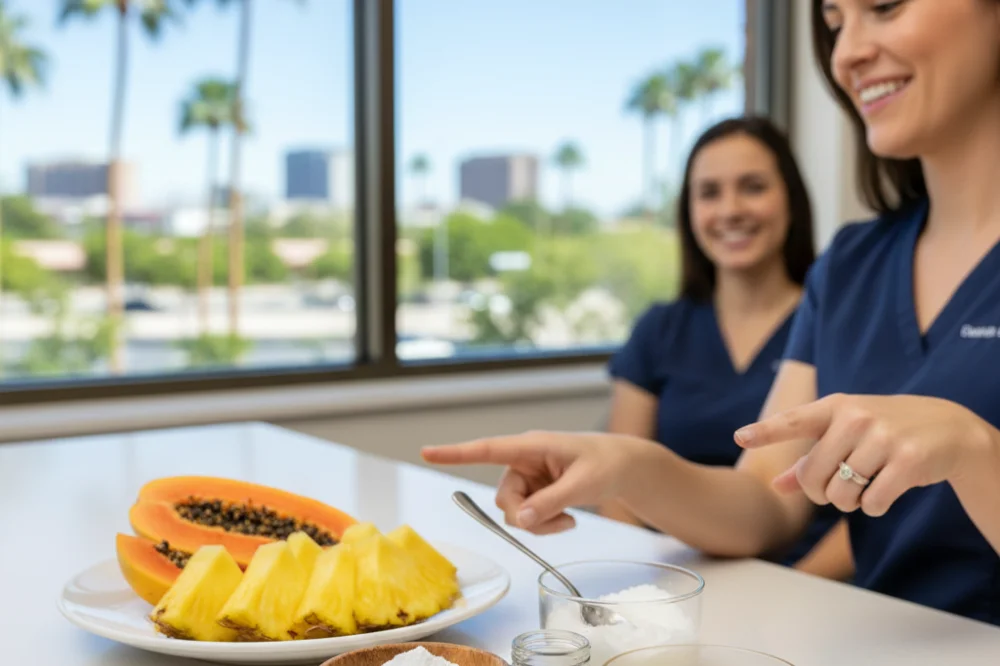
- Fruit Enzymes (Bromelain and Papain): Naturally found in pineapple and papaya, these enzymes can help break down stain particles in the protein layer of teeth. They’re safest when diluted in toothpaste or rinses. Rubbing raw fruit on teeth, however, exposes enamel to damaging acids and sugars.
- Lemon Juice or Vinegar: Though often mentioned online, these are highly acidic and should be avoided. They can strip enamel quickly, causing irreversible damage even with limited use.
If you’re not sure what’s best for your smile, it’s always a good idea to speak with Dr. Chan. A personalized recommendation can help you avoid unnecessary damage while still achieving your whitening goals.
When Natural Whitening Might Be a Good Fit
If your goal is to gently maintain a brighter smile or avoid peroxide-based products, natural methods might help. Patients who’ve already had whitening treatments often turn to these options between visits. For example, swishing coconut oil or using baking soda once a week can help remove mild stains before they settle in permanently. It’s all about timing and moderation.
There are also situations where natural methods are the only realistic option. Some patients have health conditions or allergies that limit what products they can safely use. Others have restorations like crowns or veneers, and they want their natural teeth to blend in without creating contrast. In these cases, a safe, slow, and thoughtful approach can make a real difference without putting your dental work at risk.
Dr. Chan helps patients tailor their routines based on more than just appearance. He considers enamel thickness, gum sensitivity, diet, medications, and even oral hygiene habits. That way, patients leave with a custom plan that supports their goals without creating new problems. It’s a process that focuses on both long-term health and cosmetic results.

Natural vs. Professional Whitening
If you’re not sure how natural whitening compares to what your dentist can do, this side-by-side chart breaks it down clearly. Use it as a guide when thinking through your options:
| Method | Whitening Power | Cost | Enamel Safety | Time to Results |
| Baking Soda | Low | Low | Safe in moderation | Slow |
| Coconut Oil Pulling | Very Low | Low | Very safe | Very slow |
| Fruit Enzymes | Low | Low | Safer if diluted | Slow |
| Activated Charcoal | Low | Risk varies | May scratch enamel | Slow |
| Professional Whitening | High | Mid to High | Safe under guidance | 1–2 visits |
| Custom Whitening Trays | Medium-High | Moderate | Safe when supervised | 1–2 weeks |
Natural whitening is gentle and gradual. It’s ideal for people who want to keep what they’ve got and maintain their smile over time. But for deep or stubborn stains, especially those caused by age, smoking, or long-term coffee use, professional treatments are still the most effective way to go. And they often save you time and frustration in the long run.
Questions to Ask Before You Start
Thinking of trying something new? Ask these questions first, and bring them to your next dental visit. Dr. Chan and the team at Tempe Dentistry are happy to help you sort through the noise and focus on what works:
- Is my enamel strong enough for natural abrasives like charcoal or baking soda?
- What’s the safest frequency for using these methods?
- Will this affect existing dental work, like crowns or bonding?
- Could my current sensitivity be made worse?
- What does Dr. Chan recommend based on my dental history?
A five-minute conversation can protect your smile for years. Whether you’re just exploring or already deep into your clean-living routine, Dr. Chan can help you fine-tune your whitening habits. Getting professional insight early helps prevent mistakes that could become long-term problems.
The Healthier Way to Brighten Your Smile
You don’t have to choose between natural care and real results. At Tempe Dentistry, Dr. Jeremy Chan brings practical experience and clear guidance to every patient conversation. He helps people from neighborhoods like The Lakes and Hughes Acres build smarter routines, ones that feel good and work well. His focus is always on your long-term health, not just quick fixes.
If you’re ready to explore teeth whitening that fits your lifestyle, your health history, and your smile goals, now’s the time to talk with a dentist who listens. Dr. Chan can walk you through natural methods, professional options, or a mix of both, whatever works best for your comfort and your smile.
Call Tempe Dentistry today to schedule a consultation. With the right plan in place, you’ll be able to brighten your smile without damaging your teeth, and without wasting time on fads that don’t deliver. It’s not just about looking good. It’s about feeling confident that your smile is healthy, strong, and truly your own.
Tempe Dentistry
4427 S Rural Road, Suite 2
Tempe, AZ 85282
(480) 897-2274
https://tempe.dental/
Tempe Dentistry on Google Maps
Frequently Asked Questions
Do natural teeth whitening methods really work?
They lift some surface staining, but they do not change the color underneath. Baking soda and oil pulling work on what sits on the enamel, not on discoloration inside it. The American Dental Association notes that only products with tested bleaching agents reliably lighten tooth shade. For a modest refresh between cleanings, gentle methods may help. For a visible change, results vary by person, and dentist-supervised whitening is far more predictable.
Are fruit-based whitening methods safe?
Enzyme products and raw fruit are not the same thing. Bromelain and papain are the enzymes found in pineapple and papaya. In a tested toothpaste or gel, they loosen surface stains with little enamel impact. Rubbing lemon juice or raw fruit on your teeth is different. Those acids soften enamel, and that loss does not grow back. Cleveland Clinic advises against acidic and abrasive home whitening for exactly that reason.
What is the safest natural whitening method?
The safest options are the least aggressive ones. Thorough brushing with a fluoride toothpaste does more for surface stain than most home remedies. A mild baking soda toothpaste can help occasionally, though daily scrubbing wears enamel over time. Oil pulling is low risk and may reduce the bacteria that contribute to new staining. Research indexed by the National Institutes of Health supports baking soda for surface stain removal. Abrasiveness still matters, so moderation is the rule.
Should I talk to a dentist before trying natural whitening?
Yes, because of what whitening can expose rather than what it does. Thinning enamel, gum recession, and untreated decay all make any method less comfortable and less even. An exam catches those first. Mayo Clinic notes that crowns and fillings will not lighten with the rest of your teeth. Dr. Chan can check what you are working with before you start, so you avoid sensitivity and a mismatched result.