
The staff provided excellent care, were nice to talk to and made a very comfortable visit. They were able to provide fillings to several chipped teeth with short notice while visiting Phoenix from out of country. Both myself and my dentist back home agreed the quality of the fillings were well done, and the colour was a great match. Highly recommend for the great staff and professional work done.
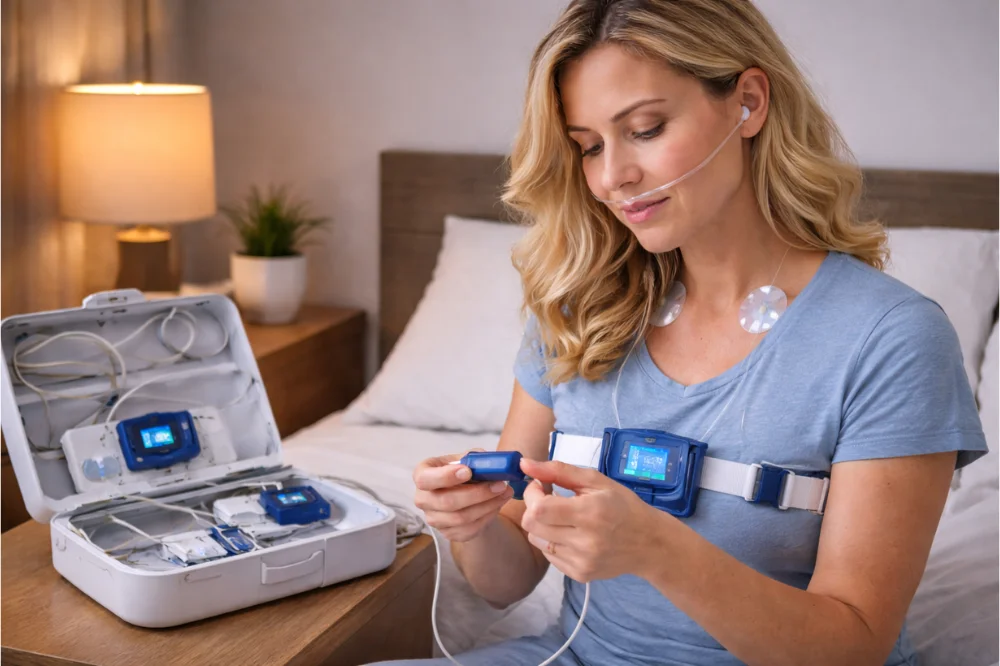
A home sleep apnea test in Tempe, AZ allows many adults to be evaluated for sleep apnea from the comfort of their own bed. Instead of spending the night in a lab, medically supervised at-home testing can capture critical breathing and oxygen data while you sleep normally. For the right patient, this approach is accurate, efficient, and far less disruptive.
At Tempe Dentistry, Dr. Jeremy Chan brings focused training and experience in sleep-disordered breathing to help patients understand whether home sleep apnea testing fits their situation. Dr. Chan earned his Doctor of Dental Surgery degree from the Arthur A. Dugoni School of Dentistry and has pursued advanced education in airway-focused dentistry, TMJ disorders, and sleep apnea screening.
While he does not diagnose sleep disorders, that role belongs to board-certified sleep medicine physicians, he works closely with medical sleep specialists to screen risk, explain testing options, and coordinate care after a physician diagnosis, in alignment with American Academy of Sleep Medicine guidelines.
What Is a Home Sleep Apnea Test (HSAT)?
A home sleep apnea test, often called HSAT, is a medically ordered at-home sleep study designed to evaluate breathing during sleep. It records airflow, oxygen levels, breathing effort, heart rate, and sometimes body position or snoring. The goal is to diagnose obstructive sleep apnea in appropriate adult patients.
HSAT is an alternative to in-lab polysomnography for uncomplicated adults who have a higher likelihood of moderate to severe obstructive sleep apnea. It is not a general sleep screening test and is not designed to diagnose insomnia, narcolepsy, parasomnias, or movement disorders.
Home sleep test devices commonly used in Arizona and the Tempe area include FDA-cleared systems such as wrist-based sensors, finger oximetry rings, or small chest and nasal airflow devices. While the equipment may look simple, the data must be interpreted by a physician trained in sleep medicine for results to be valid.
How a Home Sleep Apnea Test Works in Tempe
One of the biggest advantages of HSAT is how streamlined the process has become for Tempe residents. From initial consultation to results, many patients complete testing in a matter of days rather than weeks. Understanding each step helps reduce anxiety and delays.
The process typically begins with a consultation, either in person or via telehealth, where symptoms and medical history are reviewed. If HSAT is appropriate, the test is ordered and the device is picked up locally or shipped to your home with clear instructions.
On the night of the test, you wear the device while sleeping in your own bed. Afterward, the device is returned and the recorded data is uploaded. A board-certified sleep physician reviews and interprets the raw data, then provides a diagnosis and treatment recommendations.
Who Is and Is Not a Good Candidate for HSAT
Home sleep test is effective when used for the right patients. Adults with loud snoring, witnessed breathing pauses, gasping during sleep, and significant daytime sleepiness are often good candidates, especially if they do not have complex medical conditions.
HSAT is generally not recommended for patients with significant heart or lung disease, neuromuscular disorders, chronic opioid use, or suspected central sleep apnea. It is also not appropriate for children or for diagnosing non-breathing sleep disorders.
Before testing is ordered, a provider determines candidacy based on symptoms, health history, and risk factors. This step is critical, as choosing the wrong test can delay diagnosis and treatment.
HSAT vs In-Lab Sleep Study: Accuracy, Comfort, and Use
Both home sleep apnea tests and in-lab sleep studies can diagnose sleep apnea, but they serve different purposes. The choice depends on symptoms, medical complexity, and the level of detail required.
HSAT offers convenience, lower cost, and the comfort of sleeping at home. It is well-validated for diagnosing moderate to severe obstructive sleep apnea in uncomplicated adults when interpreted by a sleep physician.
In-lab polysomnography provides the most comprehensive data, including brain waves, sleep stages, limb movements, and video monitoring. It is preferred when symptoms are complex, when HSAT results are inconclusive, or when other sleep disorders are suspected.
| Feature | Home Sleep Apnea Test | In-Lab Sleep Study |
| Where it happens | At home | Sleep center or hospital |
| Conditions evaluated | Obstructive sleep apnea | OSA, CSA, parasomnias, PLMD |
| Comfort level | High | Moderate |
| Data detail | Limited | Comprehensive |
| Typical cost | Lower | Higher |
Choosing HSAT does not close the door to lab testing later. Many Tempe patients start at home and move to in-lab studies if needed.
Home Sleep Apnea Testing Options in Tempe, AZ
Tempe residents have access to several home sleep apnea testing pathways through local clinics and partnered sleep physicians. Many providers use FDA-cleared HSAT devices and integrate telehealth visits for convenience.
HSAT may be arranged through primary care offices, sleep clinics, or dental practices that collaborate with board-certified sleep specialists. Local coordination allows faster scheduling and clearer follow-up.
Patients living near Downtown Tempe, South Tempe, and The Lakes often appreciate the flexibility of at-home testing, especially for work schedules, caregiving responsibilities, or commuting constraints.
Cost, Insurance, and Practical Considerations
For many Tempe patients, HSAT is the most affordable way to evaluate possible sleep apnea. Most major insurance plans cover HSAT when it is medically indicated and ordered by a provider.
Out-of-pocket costs depend on insurance coverage, deductibles, and whether the test must be repeated due to technical issues. HSAT is often significantly less expensive than in-lab testing.
Before scheduling, patients should confirm insurance coverage, interpretation fees, and whether a second test would incur additional cost. Clinics can often assist with verification.
Safety, Limitations, and When HSAT Is Not Enough
HSAT is safe and effective for appropriate adults, but it is not a substitute for medical care in urgent situations. Severe shortness of breath, chest pain, or dangerous daytime sleepiness require immediate medical evaluation.
If HSAT results are negative or inconclusive and symptoms persist, providers may recommend an in-lab sleep study. This step ensures serious conditions are not missed.
Accurate diagnosis depends on physician interpretation and follow-up planning. Treating HSAT as a stand-alone answer without professional guidance can delay care.
Taking the Next Step Toward Better Sleep
A home sleep apnea test offers many Tempe adults a convenient, evidence-based way to find answers without an overnight lab stay. When used appropriately and interpreted by a board-certified sleep physician, HSAT can be the first step toward meaningful treatment.
Dr. Jeremy Chan helps guide patients through this process by identifying risk, coordinating testing, and supporting treatment after diagnosis. If you live near Downtown Tempe, South Tempe, or The Lakes, schedule a consultation to discuss symptoms, confirm whether HSAT is right for you, and plan next steps toward healthier sleep.
Frequently Asked Questions
Is a home sleep apnea test accurate?
Accuracy matters because patients want reliable answers. HSAT is considered accurate for diagnosing moderate to severe obstructive sleep apnea in appropriate adults when ordered and interpreted by a sleep physician, but it is not designed to detect every sleep disorder.
Can a dentist diagnose sleep apnea from a home test?
This matters because roles can be confusing. A dentist does not diagnose sleep apnea; diagnosis is made by a board-certified sleep medicine physician. Dentists help screen risk and coordinate care after diagnosis.
What happens if my home sleep test is negative?
This matters because symptoms may still be present. If HSAT is negative or unclear and symptoms persist, providers often recommend an in-lab sleep study for more detailed evaluation.
How do I schedule a home sleep apnea test in Tempe?
This matters because access and coordination affect outcomes. Scheduling usually starts with a consultation to review symptoms and determine candidacy, followed by ordering the test through a local clinic or partnered sleep physician.